In Mowlem, a densely populated neighbourhood on Nairobi’s Eastlands corridor, life moves to the rhythm of families, workers, traders and small businesses. Nearby, the busy Kangundo Road carries a steady stream of traffic past one of the city’s major fresh produce markets.
It was here, in 2017, that clinical officer Onesmus Kariuki and marketing specialist Trizah Wangui opened a small outpatient clinic with a simple ambition: to provide quality healthcare close to where people live and work.
They didn’t have a purpose-built hospital. They had their home. The clinic ran on the ground floor. Onesmus and Trizah lived upstairs.
“We lived on the first floor while the hospital operated on the ground floor. At night, whenever a client pressed the bell, we would hurriedly wake up, come downstairs and attend to them. Those were the humble beginnings – long nights, little rest, but so much dedication and commitment to serving our community,” says Trizah.
Over time, more patients came through the doors. The couple wanted to invest in equipment, expand the facility and offer more services. But their ambition was growing faster than their ability to finance it.
Rejected by banks…
Onesmus and Trizah turned to financial institutions for help. They were not asking for millions.
“Our initial loan request to a local bank was KES 200,000 (around €1,300). It was rejected. When we lowered the request to KES 100,000 (around €660), we were still turned away,” recalls Trizah, who also serves as the hospital administrator.
For a growing healthcare business, every rejection meant another investment postponed. The patients were there. The plans were there. So was the opportunity to provide more care. But the financing was not.
… then MCF said Yes
In August 2023, a chance meeting with one of Onesmus’s former college mates introduced the couple to us. This time, the conversation was different.
After assessing Silent Hill, we approved a first digital loan of KES 1 million (around €6,600); a lending product designed to give healthcare SMEs like Silent Hill fast, flexible access to finance that traditional lenders are unwilling to provide. It was a significant leap from the loan amounts the couple had previously been unable to secure. The loan was expected to be repaid over five years. Silent Hill repaid it in just 18 months. By January 2024, the hospital qualified for an additional KES 5 million (around €33,200) in financing.
The money helped expand the facility and equip two operating theatres. Within a year, Silent Hill had progressed from a Level 2 basic outpatient facility to a Level 3A hospital, giving it the capacity to provide a wider range of care.
Where previous lenders had focused on the risks, we took the time to understand the healthcare business behind the loan, its track record, its plans and its potential to grow. That first investment marked the beginning of a relationship that combines financing with continued support as Silent Hill grows.
For Onesmus, the impact goes beyond expanding the hospital. It rebuilt his confidence.
“MCF found us at our lowest moment, made our dream come true and increased our self-belief.”
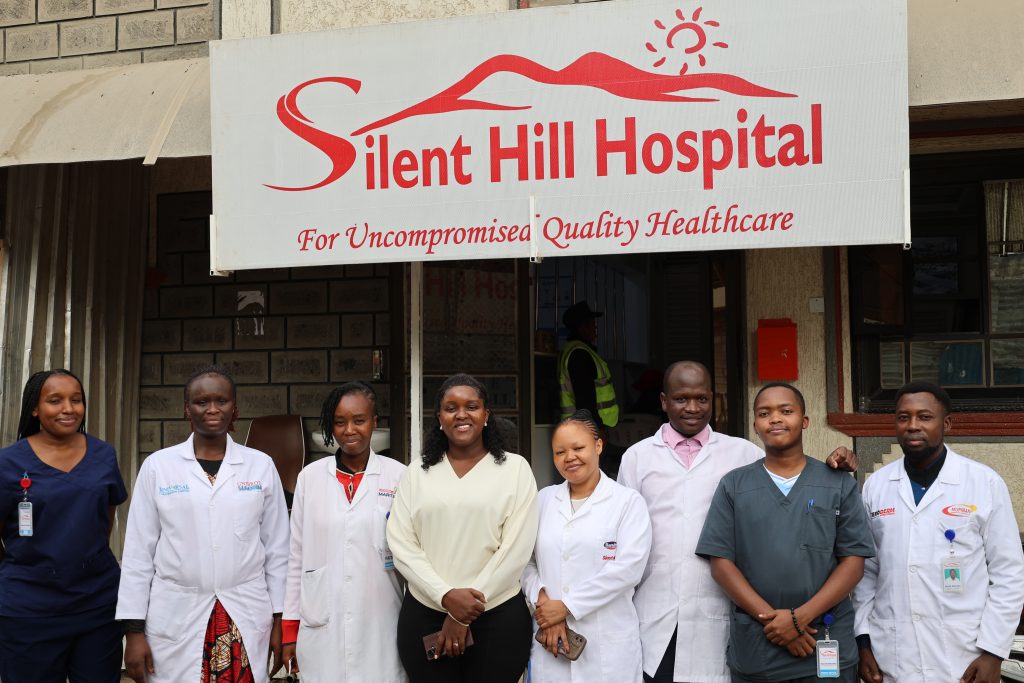
From Level 2 to a Level 3A hospital
Today, Silent Hill bears little resemblance to the small clinic that once occupied the ground floor of its founders’ home. Now operating from its own premises, the hospital is open 24 hours a day and continues to expand its services in response to the growing healthcare needs of the community it serves.
In a busy community such as Mowlem, that growth extends beyond the hospital infrastructure. Investment in Silent Hill has increased the healthcare capacity available locally, bringing a wider range of care closer to where people live and work.
Mothers can receive care through pregnancy, childbirth and the postnatal period. Families can access paediatric care, immunisation and family planning. The hospital also provides inpatient and outpatient services, minor surgery, ultrasound and X-ray diagnostics, cervical cancer screening, and dedicated hypertension and diabetes clinics. A dedicated ambulance service extends its ability to respond when urgent care is needed.
The healthcare financing gap in Kenya
Onesmus and Trizah’s experience reflects a challenge faced by many small and medium-sized healthcare providers. Being essential to their communities does not automatically make them easy to finance. A facility may have patients, plans to grow and a clear need for investment, yet still struggle to convince conventional lenders that it is an enterprise worth funding.
Across Africa, the implications extend beyond individual healthcare businesses. Where investment in healthcare is constrained, so too is the ability of local providers to expand the capacity and services their communities need. Additional infrastructure may not be built, essential equipment may not be installed and new services may never be introduced, leaving communities with fewer options for the care they need close to home.
This is the gap we were created to close: understanding healthcare businesses well enough to assess their potential and connect viable providers to the financing they need to grow. Our digital loan product is a clear example of how we do this: it lets us reach and assess SMEs quickly and disburse finance on terms shaped by the realities of running a healthcare business.
Silent Hill shows the other side of that equation: when financing becomes available, investment can move from plans on paper to equipment, infrastructure and services that bring more care within reach.
What access to financing changed
For Onesmus and Trizah, access to financing did more than fund equipment. It changed how they run Silent Hill and how far ahead they now plan for its future.
Their story is not unique to Mowlem. Across Africa, other healthcare entrepreneurs face the same ambition, the same patients, and the same lack of access to financing.